SEO Strategy for Small Businesses in 2026

The digital landscape continues to evolve at breakneck speed, and as we navigate through 2026, having a robust SEO strategy has never been more critical for small businesses. Whether you're a solo blogger, a digital marketing professional, or a business owner looking to expand your online presence, understanding how to leverage modern SEO techniques can mean the difference between thriving and merely surviving in today's competitive marketplace.
Gone are the days when simple keyword stuffing and basic backlinking could propel your website to the top of search engine results pages (SERPs). Today's SEO landscape demands a sophisticated, multi-faceted approach that combines technical excellence, high-quality content, user experience optimization, and strategic automation. This comprehensive guide will walk you through the essential components of an effective SEO strategy tailored specifically for small businesses in 2026.
Understanding the Modern SEO Landscape
The foundation of any successful SEO strategy in 2026 begins with understanding how search engines have evolved. Google's algorithms now prioritize user intent, content quality, and overall user experience more than ever before. Machine learning and artificial intelligence play central roles in determining which content deserves top rankings.
For small businesses, this shift represents both a challenge and an opportunity. While competing with larger corporations on budget alone may be difficult, the democratization of AI-powered tools has leveled the playing field significantly. Platforms like Blogauto.ai enable even the smallest businesses to produce high-quality, SEO-optimized content at scale without requiring massive content teams.
Search engines now evaluate content based on E-E-A-T (Experience, Expertise, Authoritativeness, and Trustworthiness), making it essential to demonstrate genuine knowledge in your niche. This means your SEO strategy must focus not just on ranking factors, but on building real authority in your industry through consistent, valuable content creation.
The Role of AI in Modern SEO
Artificial intelligence has transformed how we approach search engine optimization. AI tools can now analyze competitor strategies, identify content gaps, optimize for semantic search, and even predict trending topics before they peak. Small businesses that embrace AI-powered solutions gain a significant competitive advantage in implementing their SEO strategy.
The key is choosing the right tools that align with your business goals and resources. An AI blog writer can help maintain consistent content production while ensuring each piece is optimized for both search engines and human readers.
Building Your Core SEO Strategy Framework
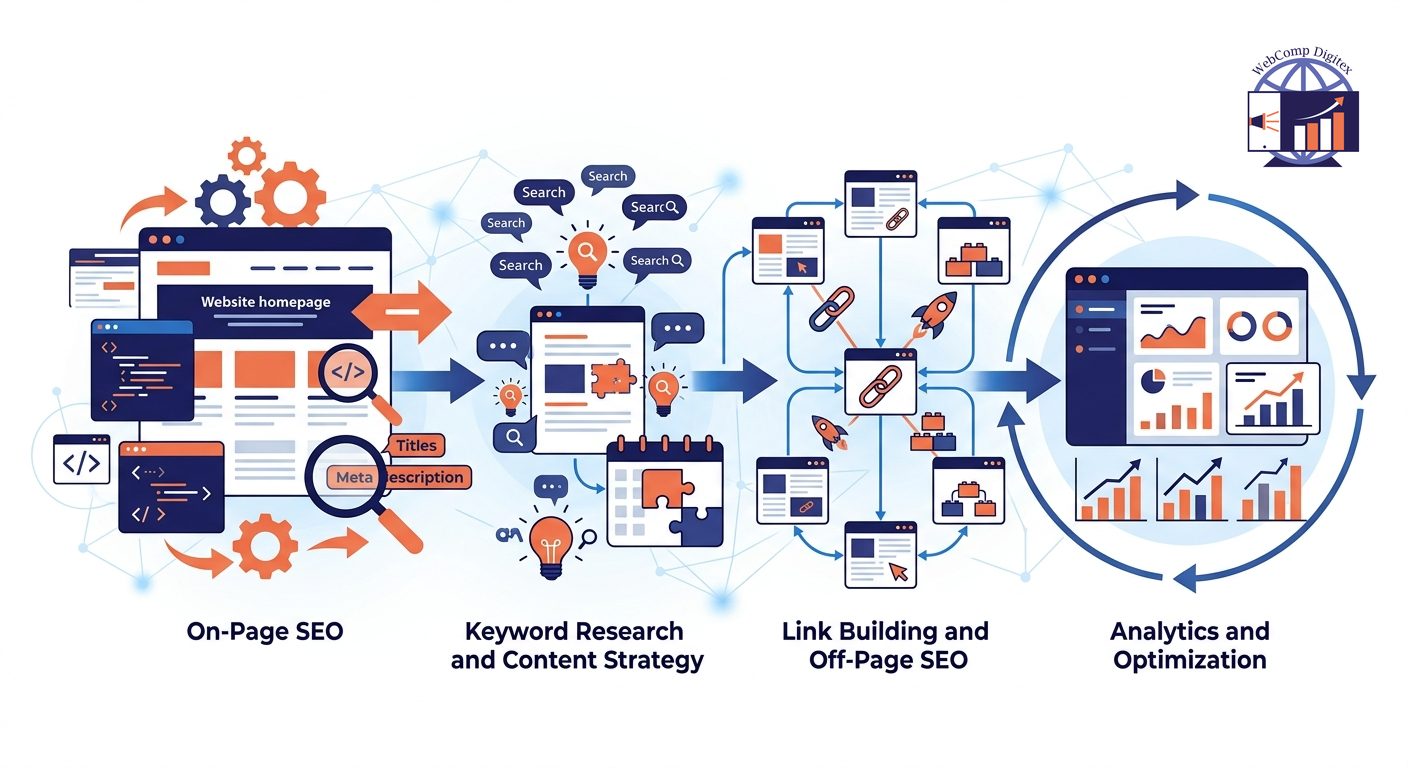
A comprehensive SEO strategy for small businesses in 2026 requires careful planning across multiple dimensions. Let's break down the essential components that should form the backbone of your approach.
Keyword Research and Intent Mapping
Keyword research remains fundamental, but the approach has evolved significantly. Instead of focusing solely on search volume, your SEO strategy should prioritize understanding user intent behind each query. In 2026, search engines are sophisticated enough to understand context, synonyms, and related concepts, making topic clusters more valuable than individual keywords.
Start by identifying your primary topics, then build out supporting content that addresses related questions and subtopics. Use tools to analyze what competitors rank for, but don't simply copy their approach. Look for gaps in content coverage where your unique expertise can shine through.
Long-tail keywords continue to offer excellent opportunities for small businesses. These more specific phrases may have lower search volumes, but they often indicate higher purchase intent and face less competition. Structure your content strategy around these valuable, specific queries that your target audience is actually searching for.
Content Quality and Consistency
Content remains king in 2026, but the bar for quality has risen substantially. Your SEO strategy must prioritize publishing comprehensive, well-researched content that genuinely helps your audience solve problems or answer questions.
The challenge for small businesses is maintaining consistency while ensuring quality. This is where automation becomes invaluable. Blogauto.ai enables businesses to maintain a steady publishing schedule with its WordPress auto-blog capabilities, ensuring your website remains fresh and relevant in the eyes of search engines.
However, automation doesn't mean sacrificing quality. The best SEO strategy combines AI efficiency with human oversight, ensuring every piece of content aligns with your brand voice and provides genuine value to readers.
Technical SEO Foundations
Technical SEO forms the infrastructure that allows your content to perform optimally. In 2026, Core Web Vitals remain crucial ranking factors, including page load speed, interactivity, and visual stability. Your website must deliver an exceptional user experience across all devices, with mobile performance being particularly critical.
Ensure your site architecture is logical and crawlable, with clear internal linking structures that help both users and search engines navigate your content. Implement schema markup to help search engines understand your content context, potentially earning rich snippets in search results.
Security also plays a role in your SEO strategy. HTTPS is non-negotiable, and implementing additional security measures can boost user trust and potentially influence rankings indirectly through improved user metrics.
Content Automation and Scaling Your SEO Efforts
One of the biggest challenges small businesses face when implementing an SEO strategy is scale. Producing enough high-quality content to compete effectively requires significant time and resources that many small businesses simply don't have.
This is where intelligent automation becomes a game-changer. Platforms like Blogauto.ai are specifically designed to help small businesses scale their content production without proportionally scaling their budgets. By leveraging advanced AI algorithms, these platforms can generate SEO-optimized articles that cover relevant topics in your industry.
The key to successful content automation is strategic oversight. While AI can handle the heavy lifting of research, structure, and initial drafting, human input ensures brand consistency, fact-checking, and the authentic voice that resonates with your audience.
Creating a Sustainable Content Calendar
Your SEO strategy should include a well-planned content calendar that balances evergreen content with timely, trending topics. Evergreen content provides long-term value and continues attracting traffic months or years after publication, while trending content can capture immediate attention and traffic spikes.
With an autoblogging platform, you can maintain consistency even during busy periods or when resources are tight. Schedule content in advance, ensuring your website remains active and signals to search engines that you're a current, authoritative source in your niche.
Optimizing for Multiple Content Formats
Modern SEO strategy extends beyond traditional blog posts. Search engines now index and rank various content formats, including videos, podcasts, infographics, and interactive tools. While text-based content remains important, diversifying your content portfolio can help you capture different segments of your audience.
Consider how your written content can be repurposed into other formats. A comprehensive blog article can become a video script, podcast episode outline, or series of social media posts. This multi-format approach maximizes the value of each piece of content while strengthening your overall SEO strategy.

Link Building and Authority Development in 2026
Link building continues to be a critical component of any effective SEO strategy, but the tactics have matured significantly. In 2026, quality dramatically outweighs quantity, and search engines have become adept at identifying manipulative link schemes.
Focus on earning links naturally through exceptional content that other websites want to reference. This means creating original research, comprehensive guides, unique insights, or tools that provide genuine value to your industry. When your content is genuinely useful, links follow naturally.
Strategic Outreach and Relationship Building
Proactive outreach remains valuable when done correctly. Identify websites in your industry that serve similar audiences but aren't direct competitors. Build genuine relationships with content creators, offering to contribute guest posts or collaborate on projects that benefit both parties.
Digital PR has become increasingly important in modern SEO strategy. Creating newsworthy content or offering expert commentary on industry trends can earn high-quality backlinks from authoritative news and industry publications.
Internal Linking Strategy
While external links get more attention, internal linking is equally important for SEO success. A well-structured internal linking strategy helps search engines understand your site architecture and distributes page authority throughout your website.
Each new piece of content should naturally link to relevant existing content, creating a web of interconnected information that keeps users engaged and helps search engines discover and understand your content relationships.
Measuring and Refining Your SEO Strategy
An effective SEO strategy requires continuous monitoring, measurement, and refinement. In 2026, data-driven decision making is essential for optimizing your efforts and maximizing ROI.
Track key performance indicators including organic traffic, keyword rankings, conversion rates, bounce rates, and engagement metrics. However, don't obsess over daily fluctuations. SEO is a long-term investment, and meaningful results typically manifest over months rather than days.
Tools and Analytics
Leverage analytics platforms to understand how users find and interact with your content. Google Analytics and Google Search Console remain essential free tools, providing insights into search performance, user behavior, and technical issues that may impact rankings.
For small businesses using Blogauto.ai, built-in analytics can help you understand which topics and content types perform best, allowing you to refine your content strategy based on actual performance data rather than guesswork.
Adapting to Algorithm Updates
Search engine algorithms continuously evolve, and your SEO strategy must be flexible enough to adapt. Rather than chasing every algorithm update, focus on fundamental best practices: creating valuable content, ensuring technical excellence, and building genuine authority in your niche.
When major updates occur, monitor your analytics for significant changes, but avoid making hasty decisions based on short-term fluctuations. If you've built your SEO strategy on solid foundations, you'll typically weather algorithm updates better than sites using manipulative tactics.
Frequently Asked Questions
How long does it take to see results from an SEO strategy?
SEO is inherently a long-term investment. Most businesses begin seeing measurable improvements within 3-6 months, with more substantial results appearing after 6-12 months of consistent effort. The timeline depends on factors including your industry's competitiveness, current website authority, and the quality and consistency of your SEO efforts. Small businesses using platforms like Blogauto.ai can often see faster results due to the ability to maintain consistent, high-quality content publication schedules.
What's the most important ranking factor in 2026?
There's no single "most important" ranking factor, as modern search algorithms evaluate hundreds of signals. However, content quality and relevance remain paramount. Search engines prioritize content that genuinely answers user queries, demonstrates expertise, and provides exceptional user experience. Technical performance, particularly Core Web Vitals, and authoritative backlinks also play crucial roles in a comprehensive SEO strategy.
How much should small businesses budget for SEO?
SEO budgets vary widely depending on industry, competition, and goals. Small businesses should expect to invest anywhere from $500 to $5,000 monthly, whether through in-house efforts, agency partnerships, or tools and platforms. The beauty of modern SEO strategy is that automation tools make sophisticated SEO accessible even to businesses with limited budgets. Check the pricing options for scalable solutions that fit various budget levels.
Can I handle SEO myself or do I need to hire an agency?
Many small business owners successfully manage their own SEO strategy, especially with the help of modern AI-powered tools. Platforms like Blogauto.ai democratize access to sophisticated SEO capabilities that previously required expensive agencies or specialists. However, if your industry is highly competitive or you lack the time to learn and implement SEO best practices, working with experienced professionals may provide better ROI. Many businesses find success with a hybrid approach: using automation tools for content creation while consulting with SEO experts for strategy and technical optimization.
Conclusion: Building Your SEO Future
Developing and implementing an effective SEO strategy in 2026 may seem daunting for small businesses, but the rewards justify the effort. By focusing on quality content, technical excellence, strategic link building, and leveraging modern automation tools, even businesses with limited resources can compete effectively in search results.
The key is starting with a solid foundation and maintaining consistency. You don't need to implement every tactic simultaneously—instead, prioritize the fundamentals, establish a sustainable content production system, and gradually expand your efforts as you see results.
Modern platforms like Blogauto.ai have removed many traditional barriers to effective SEO, making sophisticated optimization strategies accessible to businesses of all sizes. Whether you're just beginning your SEO journey or looking to refine an existing strategy, the opportunities for growth through organic search have never been more promising.
Remember that SEO is not a one-time project but an ongoing process of refinement and improvement. Stay informed about industry developments, continuously test and measure your efforts, and always prioritize providing genuine value to your audience. With patience, persistence, and the right tools, your small business can achieve remarkable visibility and growth through strategic search engine optimization.
Ready to automate your blog?
Join hundreds of businesses publishing SEO articles on autopilot with Blogauto.ai
Start Free Trial →